
Brighter Than A Thousand Suns
Title: Private Faces
Release: April 7th, 2026
Genre: Synth Pop
Label: self-released
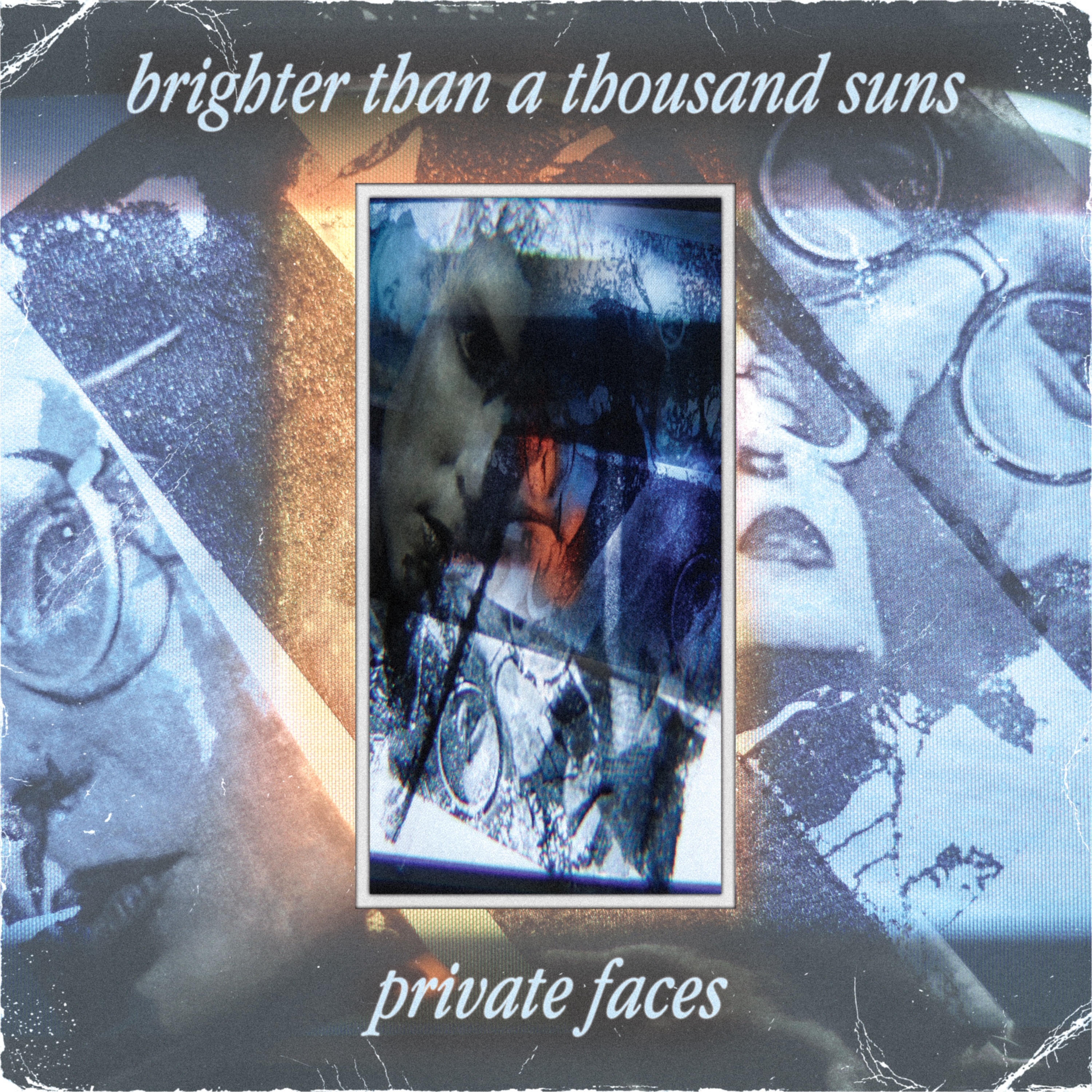
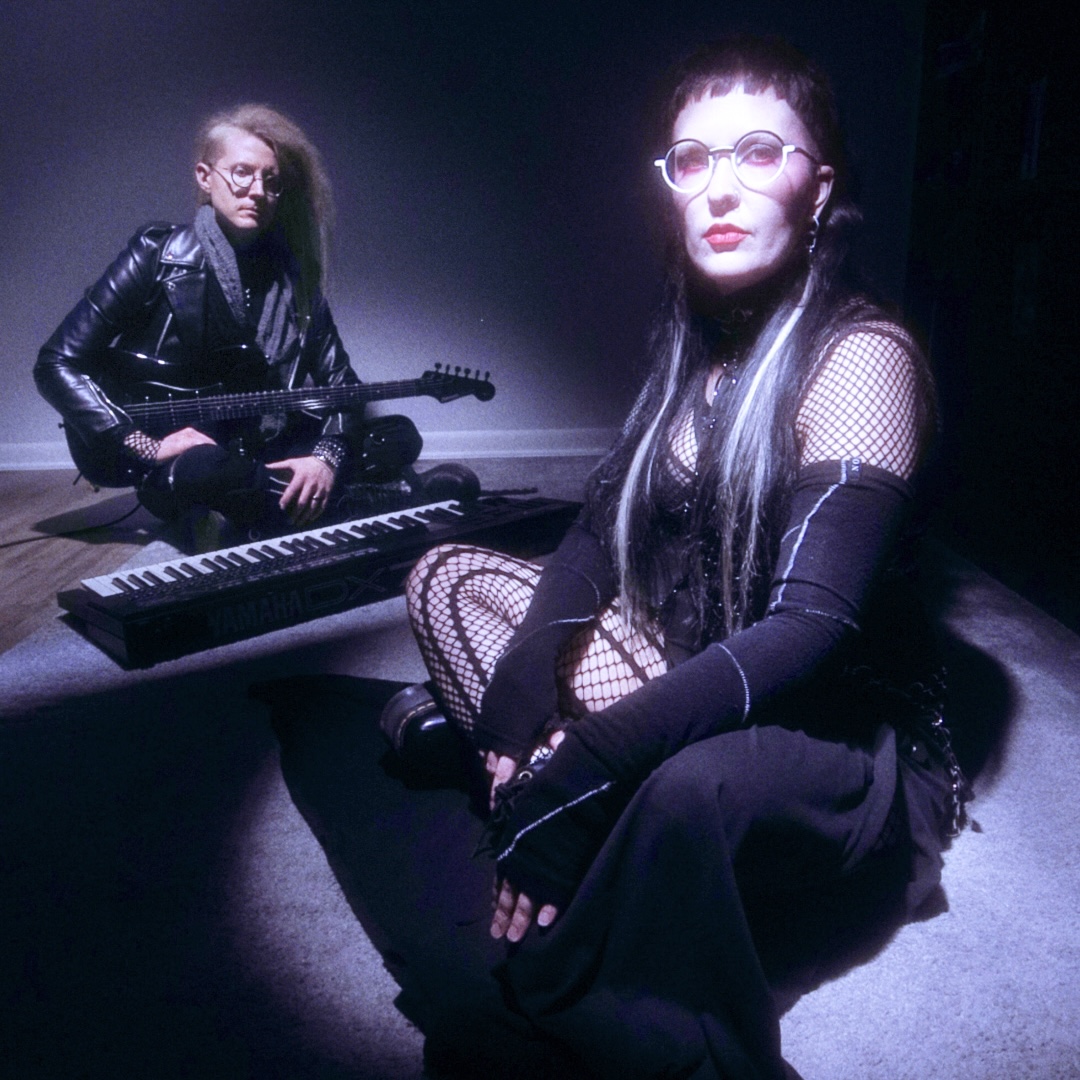
With Private Faces, released in April 2026, Brighter Than A Thousand Suns open another chapter in their musical evolution. The duo from Winston-Salem, North Carolina, consists of Angelika and Randy Roswell. Their musical roots lie in post-hardcore and metalcore, but through the incorporation of electronic and rock-inspired elements, their sound has increasingly evolved towards synth-pop. Following on from Truth to Materials (2024), they consistently continue along this path on their third studio album. The earlier intensity has by no means disappeared entirely, but lives on in a different form within the electronic soundscape.
What particularly strikes me when comparing the three albums is Angelika Roswell’s enormous vocal range. Anyone familiar with her earlier musical career will know that she is also capable of delivering much heavier metal vocals. On the three albums by Brighter Than A Thousand Suns, however, she showcases very different facets of her voice. On Private Faces in particular, it becomes clear just how versatile her singing is: at times powerful and commanding, at times melodic, then subdued or almost spoken. The metal side of her voice isn’t in the foreground here, but her earlier experience makes it all the more evident just how much she’s capable of vocally.
One Touch
The album couldn’t have gotten off to a better start. One Touch sets the musical tone immediately and draws you straight in with its undeniably danceable groove. Right from the outset, the distinctive synth horns add a striking touch and give the song extra drive from the very first second. The bassline, in particular, stands out. It has this funky, slightly slappy character and creates a groove all of its own.
Over this lie other distinctive synthesizer sounds that don’t simply serve as a backdrop but repeatedly add clear accents. Randy’s use of electronic sounds, in particular, is highly recognizable. His own distinctive synthesizer signature runs throughout the album and ensures that the songs remain connected despite their varying moods.
Angelika’s vocals also complement the song perfectly. Her melodies float lightly over the driving instrumental track, making the song incredibly catchy. At the same time, there’s more to the lyrics than the initially lighthearted musical atmosphere might suggest. The song is about secrets, temptation, hidden sides, and obsession. This contrast between the lighthearted sound and the lyrics works exceptionally well.
Film Noir
In contrast to the bright, danceable opener, Film Noir takes a decidedly cooler turn. The song lives up to its name and creates an atmosphere that truly brings to mind a night-time film scene.
The drums run very straightforwardly and almost mechanically throughout the song. Together with the electronic sounds, this creates a certain sense of distance, which is precisely what gives the track its appeal. In the verses, Angelika sometimes adopts an almost spoken vocal style, which further emphasizes the somber mood.
Lyrically, too, the song is about secrets, loneliness and the masks people wear for the outside world. The lines “Dark alley. Pop collar trench coat… Hide away the ghost you want to save” immediately conjure up images in the mind.
In the chorus, the song opens up melodically and becomes much catchier. I particularly like the contrast between the understated verses and the more expansive, bittersweet chorus. Towards the end, a distorted guitar also comes in, adding a rougher edge that blends well with the otherwise electronic atmosphere.
God for Hire
For me, God for Hire is one of the absolute highlights of Private Faces. The song combines a rousing groove with some decidedly biting lyrics.
The opening lines alone make a statement: “I can hear your true confessions. I can be your next obsession… ’cause faith is cheap when you can buy belief. In a god-eat-god economy.”
Musically, this is a gripping club track, driven by striking synth effects, a funky slap bassline and an incredibly danceable beat. The rhythm possesses a remarkable vitality and builds up a forward momentum that is hard to resist. The synthesizers add vibrant accents, at times evoking the heyday of the 1980s without ever sounding old-fashioned.
As for the lyrics, the song addresses the theme of faith and presents it in a rather cynical light. Beliefs become a commodity; faith can be sold; and religious needs can be deliberately exploited. The line “Kneel before your god for hire” in particular sums up this provocative stance.
What I find particularly impressive about it is the way the song conveys its message through music. The chorus has a grand, almost anthem-like catchiness, while the lyrics are anything but harmless. It’s easy to just get swept up in the groove, but if you pay closer attention to the lyrics, the song takes on a whole new dimension. It’s exactly this combination that makes it so powerful to me.
Break Through the Noise
With Break Through the Noise, the mood shifts once again. The song sounds significantly heavier and the synthesizers take up considerably more space. At times, veritable walls of sound emerge, lending the track a tension-filled intensity.
The song’s message is about sensory overload and the difficulty of finding one’s own voice in a world full of external influences. To what extent are our perceptions and opinions influenced by the constant barrage of information we’re subjected to? And how can we even manage to hear ourselves above all this noise?
The line “I can’t break through the noise” captures that feeling quite aptly. The dense production reinforces the theme, because musically, too, you hardly get a chance to truly relax. That makes Break Through the Noise one of the heavier and more intense moments on the album.
Incurious
Following its heavier predecessor, Incurious brings back a sense of dynamics and energy. A distinctive synthesizer loop runs throughout the song, giving it a unique rhythmic character. Angelika’s vocals also take on a stronger rhythmic quality again, at times verging on spoken word.
The title can be translated into German as “uninteressiert” or “nicht neugierig” and already gives a hint as to the song’s thematic focus. Lines like “Myopia’s gotten serious / You make me furious / You’re so incurious” clearly express criticism of a lack of curiosity and an unwillingness to question things.
Sonically, the song has a certain playful lightness that stands in striking contrast to the clear annoyance in the lyrics. While the catchy synth hook and the spoken-word-tinged delivery create a sense of carefreeness, the lyrics convey an unmistakable frustration.
Complexity
Complexity explores a world that seems increasingly superficial and interchangeable. The title alone gives a hint of what it’s about: the desire for more depth and complexity instead of ever-changing arbitrariness.
On an instrumental level, the song remains clearly structured without the electronic elements losing any of their impact. They intertwine and lend the piece a profundity all its own.
The line “Complexity / Miss me with your vapid mediocrity” in particular sums up the song’s attitude quite directly. It’s not a particularly subtle message, but it’s precisely this clarity that works well here.
Wavelength
The album takes a more emotional turn with Wavelength. The synthesizers create an expansive, almost ethereal atmosphere, while the drums keep the song moving forward.
What I particularly like here is the interplay between the electronic sounds and the guitar. It adds an extra layer of warmth to the sound, thereby changing the overall feel of the song. Angelika’s vocals are also more melodic and come across as more open and less edgy overall than in some of the previous songs.
Wavelength thus serves as a lovely counterpoint to the album’s edgier and more intense moments. The song reveals a different, more emotional side of Brighter Than A Thousand Suns without losing its own sonic identity.
Linguicide
As the grand finale, Linguicide strikes a significantly darker note once again. Even the title, which translates to “Sprachmord” in German, implies a serious theme.
From a sonic perspective, the track is built on a heavy electronic foundation. The bassline drives it forward, while the synthesizers blend together to form a dense, compact soundscape. This creates an atmosphere that has a distinctly oppressive quality.
The more I listened to this piece, the more it stood out to me. For me, it’s one of those songs that doesn’t necessarily reveal itself fully on the first listen, but grows on you with every subsequent listen. Along with God for Hire, Linguicide is therefore one of the strongest songs on the album for me.
Final Thoughts
To me, Private Faces clearly shows how Brighter Than A Thousand Suns continue to evolve musically without completely leaving their past behind. The influence of the 1980s is definitely audible, but the album doesn’t come across as an attempt to simply copy a bygone era. Rather, the duo combines catchy synth-pop elements with their own electronic sound and a certain raw edge that shines through time and again.
A key element of this is Randy’s signature synthesizer style, as his playing often carries a distinct lightness. His sounds give the album a high level of recognizability. Added to this are the various rhythmic and guitar accents, which ensure that the record never becomes monotonous.
Angelika’s vocals also play a major role in the album’s versatility. Especially when you compare the three albums and take her earlier musical career into account, it becomes clear just how many ways she has of expressing herself. On Private Faces, she uses her voice in a wide variety of ways, constantly adapting it to the mood of each song.
And it’s also worth listening more closely to the songs themselves. God for Hire captivated me right from the start, but the more I listen to the album, the more other tracks stand out. Linguicide is a good example of this. It’s precisely these songs that take on a whole new meaning over time.
For me, Private Faces is therefore an album that works not only because of its danceable synth-pop moments, but also because of its rough edges and the many details that only gradually reveal themselves. Brighter Than A Thousand Suns have found their own sound and are consistently developing it further here.
Christina Angrabeit
Editorial note: Further clarifications or minor editorial adjustments may be made at a later date.
Rating:
Music: 10/10
Lyrics: 10/10
Production: 10/10
Artwork: 7/10
Tracklist Private Faces:
- One Touch (02:35)
- Film Noir (03:17)
- God for Hire (03:11)
- Break Through the Noise (03:58)
- Incurious (02:57)
- Complexity (03:21)
- Wavelength (03:22)
- Linguicide (03:02)
Line Up:
Brighter Than A Thousand Suns is:
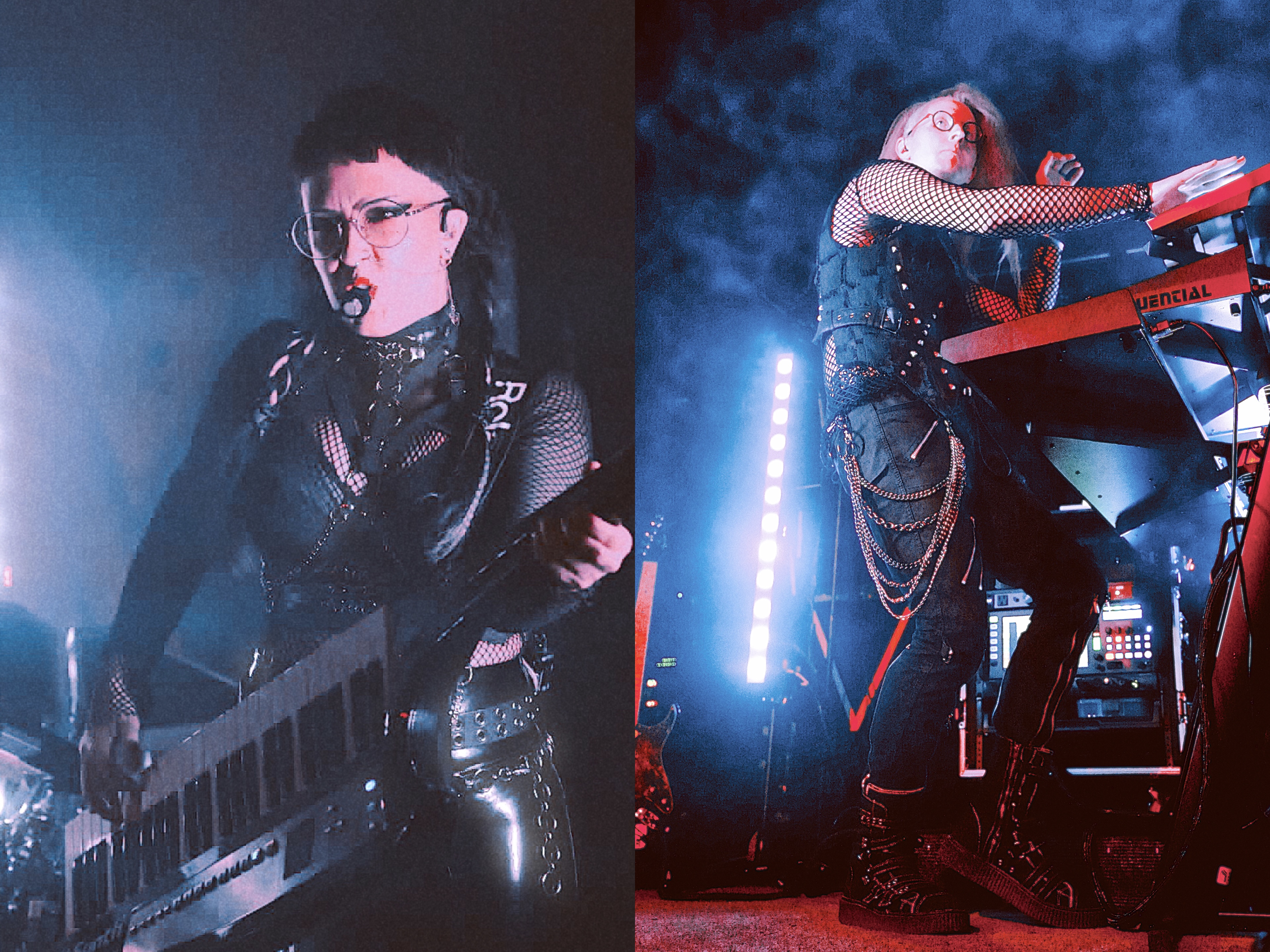
Angelika Roswell: Vocals, Drums, Synthesizers
Randy Roswell: Guitars, Synthesizers, Programming
Links:
Website: https://brighterthanathousandsuns.com/
Bandcamp: https://brighterthanathousandsuns.bandcamp.com/album/private-faces
Spotify: https://open.spotify.com/intl-de/artist/4ousFsXG8f3RB4Ix5bFUQ4
YouTube: https://www.youtube.com/brighterthan1000suns
Instagram: https://www.instagram.com/btatsband/

