NITE
Title: NITE
Release: October 21st 2025
Genre: Dark Wave/ Synth Pop/ Post Punk/ Gothic
Label: Independent
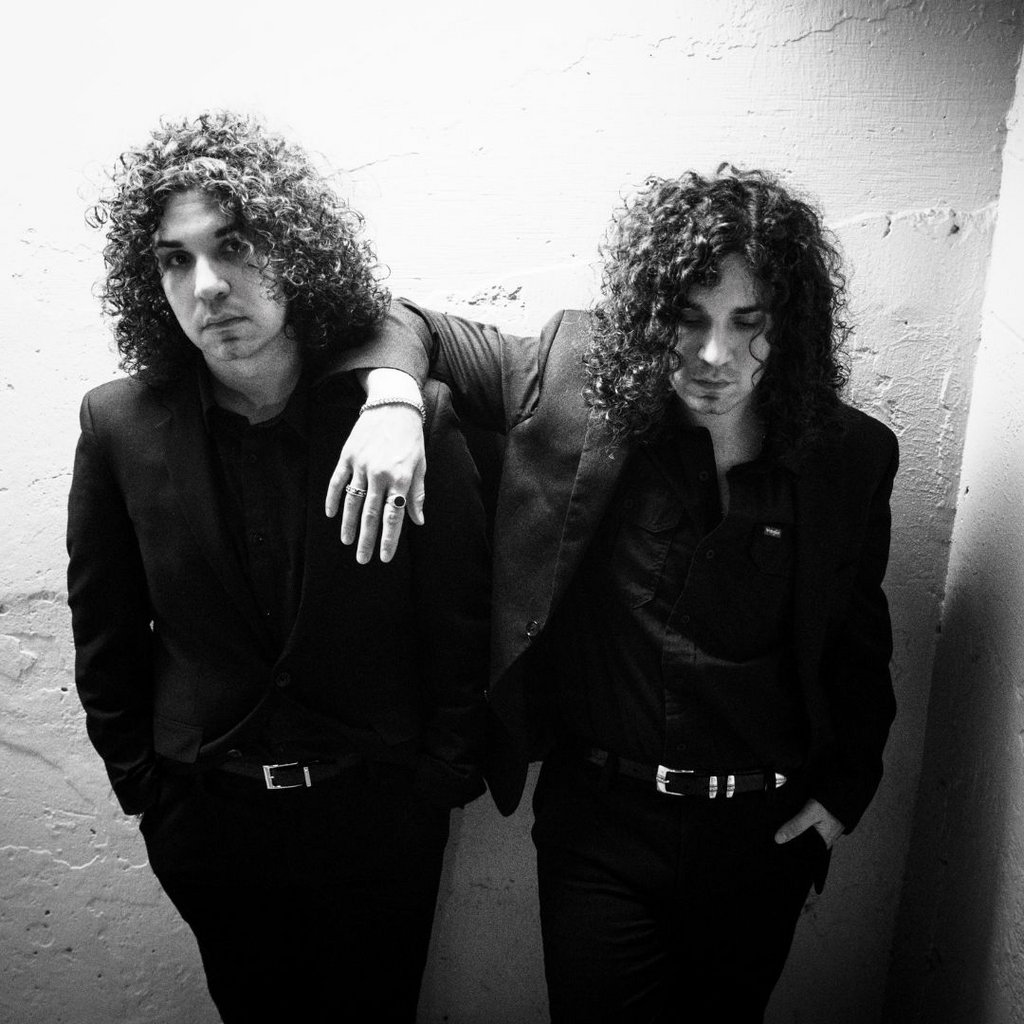
NITE is one of the few bands on the scene to feature two lead singers on equal footing—and in this case, Myles and Kyle Mendes are actually twin brothers. I had the opportunity to see the band live on April 4, 2026, at Hafenklang in Hamburg, where they left a lasting impression with an intense and rousing performance. What stood out most was that their songs sounded even more powerful, raw, and forceful on stage than they do on the studio album.
Together with drummer Phil Helms, Myles and Kyle Mendes create a sound that skillfully blends the somber atmosphere of dark wave with modern synth-pop and post-punk influences. Classic ’80s elements meet contemporary production, all while the band never loses sight of its own musical identity.
The Dallas, Texas-based band releases their fifth studio album, NITE, featuring ten tracks. A cover of The Cure classic Burn is also included as a bonus track on streaming platforms. Compared to its predecessor, BE DESTROYED, NITE has a much more synth-heavy and melodic sound. While BE DESTROYED still has a rougher, almost grunge-like edge in places, NITE relies more heavily on atmospheric synthesizers, catchy melodies, and a balanced blend of darkwave, synth-pop, and post-punk.
The opening track, All Your Pain, blends darkwave with catchy synth-pop elements. Pulsating synthesizers, echoing guitars, and subdued vocals create a nocturnal, melancholic atmosphere that is nonetheless propelled by a driving rhythm. Lyrically, the song can be interpreted as an exploration of closeness, emotional connection, and the willingness to share another person’s pain.
Cries for Help features a minimalist, synthesizer-driven sound that creates a dense atmosphere with cool soundscapes and a hypnotic rhythm. The electronic arrangements take center stage, creating a cool, detached atmosphere that makes the song seem almost otherworldly.
Lyrically, the song revolves around isolation, helplessness, and the desire to be heard when crying out for help. The rather restrained musical arrangement reinforces the sense of emotional distance and loneliness.
The interplay between the two voices is also particularly interesting here. In Cries for Help, it’s easy to hear how the Mendes brothers’ vocal styles differ: Kyle’s voice sounds slightly higher, while Myles’ is characterized by a slightly deeper timbre. It is precisely because of the song’s calm and understated arrangement that the different vocal timbres stand out so clearly.
End In Tears is one of the emotional highlights of the self-titled album NITE. In contrast to the cool, electronically driven Cries For Help, the song takes a much more melancholic and dreamy direction. The track combines yearning post-punk guitars with soft synth pads, creating a wistful new wave atmosphere.
Sonically, it evokes the melancholic side of the genre, as found in bands like The Cure or New Order. Despite its sad title, End In Tears remains danceable thanks to its driving rhythm—an example of that special blend of melancholy and movement that makes you want to dance and give in to your emotions at the same time.
The song’s lyrics revolve around longing, transience, and the fear of losing a deep connection. Images of memory and dreams convey the feeling of being able to hold onto someone only in one’s thoughts. The chorus serves as a hopeful counterpoint to this fear: the desire to preserve a special moment, even as the possibility of pain remains ever-present.
Here, too, the difference in the sound of the Mendes brothers‘ voices becomes clear. Myles takes the lead vocals on “End in Tears,” which sound noticeably deeper than Kyle’s vocal timbre.
Easy is the fourth track on the album and marks a noticeable musical shift. While NITE delves deep into dark post-punk and darkwave soundscapes on other tracks, this song takes a distinctly more electronic and melodic direction.
Musically, Easy blends melancholic new wave elements with catchy synthesizer melodies. The influences cited by the band—the emotional depth of The Cure and the synth-pop aesthetic of the Pet Shop Boys—are reflected in a sound that feels both nostalgic and modern. Despite its danceable, almost ethereal atmosphere, the song remains vulnerable and emotional.
Thematically, Easy explores the challenges of self-discovery, love, and inner barriers. The song’s central message is that honesty, closeness, and genuine feelings are valuable, but should never be taken for granted. Set against a backdrop of self-doubt and the desire for change, the song inspires listeners to face their own fears.
Fail You showcases a much more dynamic side of NITE and breaks away somewhat from the album’s underlying melancholic mood. A striking, pulsating bassline and powerful electronic drums lend the song an intense energy. Despite its dark themes, the track evokes an irresistible urge to dance—a piece that blends the melancholic atmosphere of darkwave with a strong club energy.
The lyrics of Fail You reflect feelings of guilt, the fear of disappointment, and personal vulnerability. The recurring line “I never want to fail you” comes across as a desperate cry and an admission of the fear of losing someone important or letting them down.
Amid feelings of withdrawal and self-doubt, a portrait emerges of a person grappling with their own mistakes and decisions. The question of one’s own path and identity lends the song an added emotional depth.
We’re Not Normal is one of the album’s central moments and captures the feeling of not being understood or accepted by the outside world. The song tells the story of a person who finds themselves outside of societal expectations, yet has someone by their side whom they perceive as special and valuable. At the same time, a desire for freedom and to escape this situation runs throughout the lyrics.
The track showcases its powerful yet somewhat solemn side. The comparatively slow rhythm creates a hypnotic effect and underscores the song’s serious and self-assured aura. At the same time, it lends the song a rebellious, almost liberating quality. NITE drew inspiration for this track from the band Love and Rockets. The melodic side of goth rock is skillfully blended here with electronic pop influences.
The feeling of being different also comes through clearly in the lyrics. The recurring line “We’re not normal” comes across less as a way of distancing themselves out of insecurity and more as a shared observation: The two feel that the outside world doesn’t understand them and doesn’t see them the way they see themselves. This becomes particularly clear in the line “But the world doesn’t see.” While the narrator perceives the other person as “pretty,” the outside world seems unable to recognize that person’s true worth.
The desire for freedom becomes increasingly clear as the song progresses. With “We would like to be free” and the closing line “Set me free,” the feeling of exclusion ultimately transforms into a concrete desire to escape this situation. The repeated statement “We were misunderstood” also underscores that this is less about a conscious separation from society and more about the feeling of being misunderstood and rejected by it.
We’re Not Normal is therefore not simply an ode to individuality. The song combines the feeling of being different with exclusion, personal connection, and the desire for freedom. It is precisely this ambivalence that makes it one of the album’s most emotionally powerful tracks.
Oblivion (My Obsession) reveals another facet of NITE, blending dark emotions with a surprisingly danceable energy. The song thrives on this compelling contrast: While the lyrics are marked by themes of pain, transience, and inner turmoil, the track simultaneously builds a powerful rhythmic pull.
The striking, angular guitar line, in particular, gives the song its own unique character. The precise, cutting guitar accents stand out clearly in the soundscape and reinforce the blend of melancholy and urgency.
Lyrically, Oblivion revolves around obsession and the contradictory aspects of a relationship. The line “Our hearts will meet to break like glass” alone describes a connection that seems fragile from the very beginning. At the same time, the pain itself becomes an integral part of this relationship: “She cuts me up like a knife but it feels like fun” links hurt with an almost playful sensation. The recurring line “We don’t understand why we need each other’s arms” makes it clear that the connection is difficult for both of them to explain, yet they still feel drawn to one another. Finally, “When I come undone you can ease the pain” reveals the contradictory nature of this relationship: the very person who causes pain and fear can also alleviate that pain.
Have Mercy deals with pain, transience, and the attempt to project strength outwardly even though something is breaking inside. Right from the first lines, the song paints a picture of a facade behind which vulnerability is hidden—concealing one’s own pain becomes a central theme of the song.
The recurring plea “Have mercy on me” comes across as a desperate cry for help and serves as the emotional centerpiece of the track. Images of suffering and loss heighten the somber atmosphere and convey a sense of inner exhaustion and hopelessness.
On an instrumental level, however, this heaviness is counterbalanced by a surprisingly catchy, danceable energy. The driving, ’80s-inspired rhythm blends melancholy with movement—it is precisely this mix of darkness and danceability that makes the song so compelling. Live, “Have Mercy” has a particularly intense impact: the recurring cry for mercy becomes a moment that is not just about the individual, but takes over the entire atmosphere of the room.
Price For Heaven holds a special place on the album and, for good reason, bears the name of the accompanying European tour. The song explores the search for personal happiness and the question of what sacrifices and challenges are inevitable along the way.
The band itself describes the track as an exploration of the “sacrifices, challenges, and sometimes painful realities” one faces while searching for one’s own version of heaven on earth. At its core, then, is the question of what people must endure to achieve personal fulfillment, freedom, or a deep connection.
Price For Heaven uses powerful imagery of captivity and liberation. The metaphors of chains, pain, and overcoming boundaries paint a picture of a person seeking freedom while simultaneously struggling with life’s burdens. At the same time, the song questions the pursuit of superficial promises of happiness and the attempt to fill inner emptiness with external distractions.
NITE combines the energy of electronic club music with the melancholic atmosphere of post-punk and synth-pop. Pulsating rhythms meet a dark, emotional soundscape, once again showcasing the band’s unique strength: music that invites you to dance while also addressing serious themes. The blend of electronic energy and emotional depth makes this track an absolute highlight.
Our Light Will Never Die is one of the album’s most hopeful moments and stands in deliberate contrast to the previous songs, which were marked by pain, doubt, and inner struggles. Even the title itself feels like a promise: a reminder that something lasting can exist, even when everything around you is changing.
For me, the song also has a spiritual dimension. The recurring line “Our light will never die” can be understood as a symbol of an indestructible bond—of the idea that memories, love, passion, or even one’s own soul can endure beyond the boundaries of life. The “light” thus becomes a symbol of hope, unity, and something that cannot be extinguished.
Lyrically, too, the song embodies resilience and optimism. While other tracks on the album are more marked by vulnerability and darkness, “Our Light Will Never Die” looks to the future. The central message is a defiant declaration: despite all obstacles, something endures that is stronger than doubt and transience.
This track feels much more open than many of the album’s darker moments. Warmer synthesizers, a sweeping melody, and a chorus that feels more expansive give the song an almost anthem-like atmosphere. Somewhere between synth-pop and emotional darkwave, a soundscape emerges that feels not only melancholic but also uplifting.
When performed live, the song has a special impact: After the intense and introspective moments on the album, it creates a sense of community. “Our Light Will Never Die” becomes a moment of unity—a song in which the darkness doesn’t disappear, but is pierced by a sense of hope.
With Burn, NITE takes on one of the most iconic songs in gothic history. The original by The Cure, known from the soundtrack of the cult film “The Crow,” has long been considered a milestone of the genre. For NITE, however, the song is not just a cover, but a tribute to a band that has had a decisive influence on their own musical path.
The connection to The Cure is particularly significant here: Kyle and Myles Mendes have repeatedly emphasized the influence the band has had on their own musical development. Burn therefore feels like a tribute to one of their most important role models—yet at the same time, NITE manages to give the song a distinct identity of its own.
The song also fits surprisingly well into the world of NITE in terms of its content. The dark imagery of shadows, longing, and inner pain picks up on themes that already run throughout the album. The recurring motif of “burning” represents an overwhelming emotional intensity—a combination of desire, loss, and despair.
What makes NITE’s interpretation special is that they don’t simply replicate the original. The band captures the song’s dark, mystical atmosphere but translates it into their own musical language, blending darkwave, synth-pop, and post-punk. The heavy synth bass, the powerful drums, and the electronic energy give Burn a new intensity.
For me, this gives NITE’s version a fascination all its own. Without meaning to detract from The Cure’s original, this interpretation feels more modern and immediate—less like a copy and more like a continuation of the original idea. The song unfolds with tremendous power, especially live: the dark emotions of the original blend with NITE’s physical energy, transforming the track into an intense moment on the dance floor.
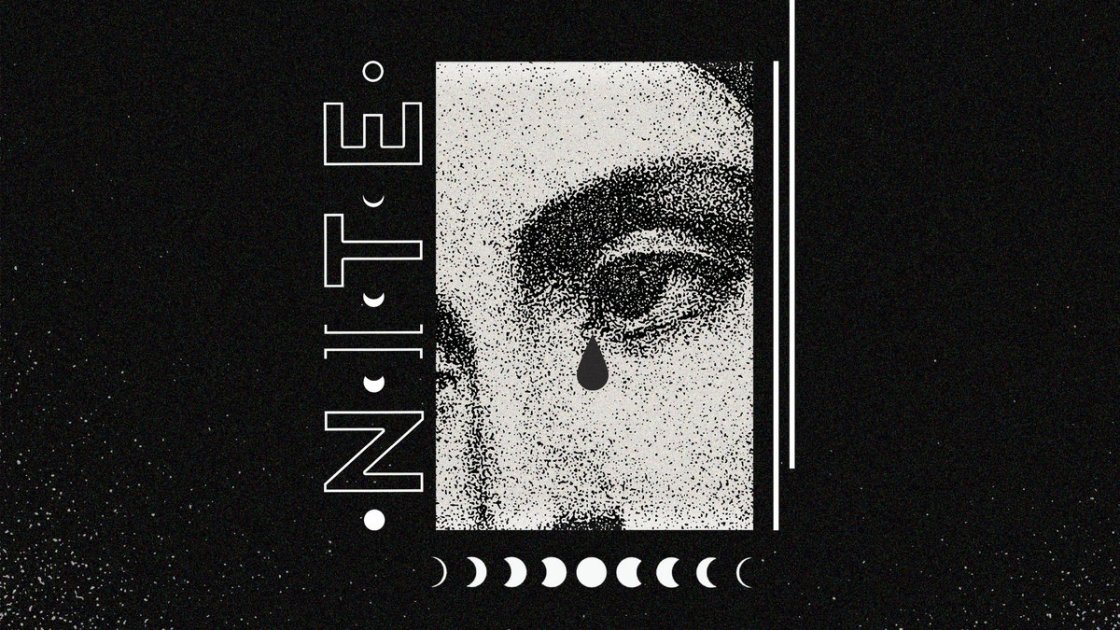
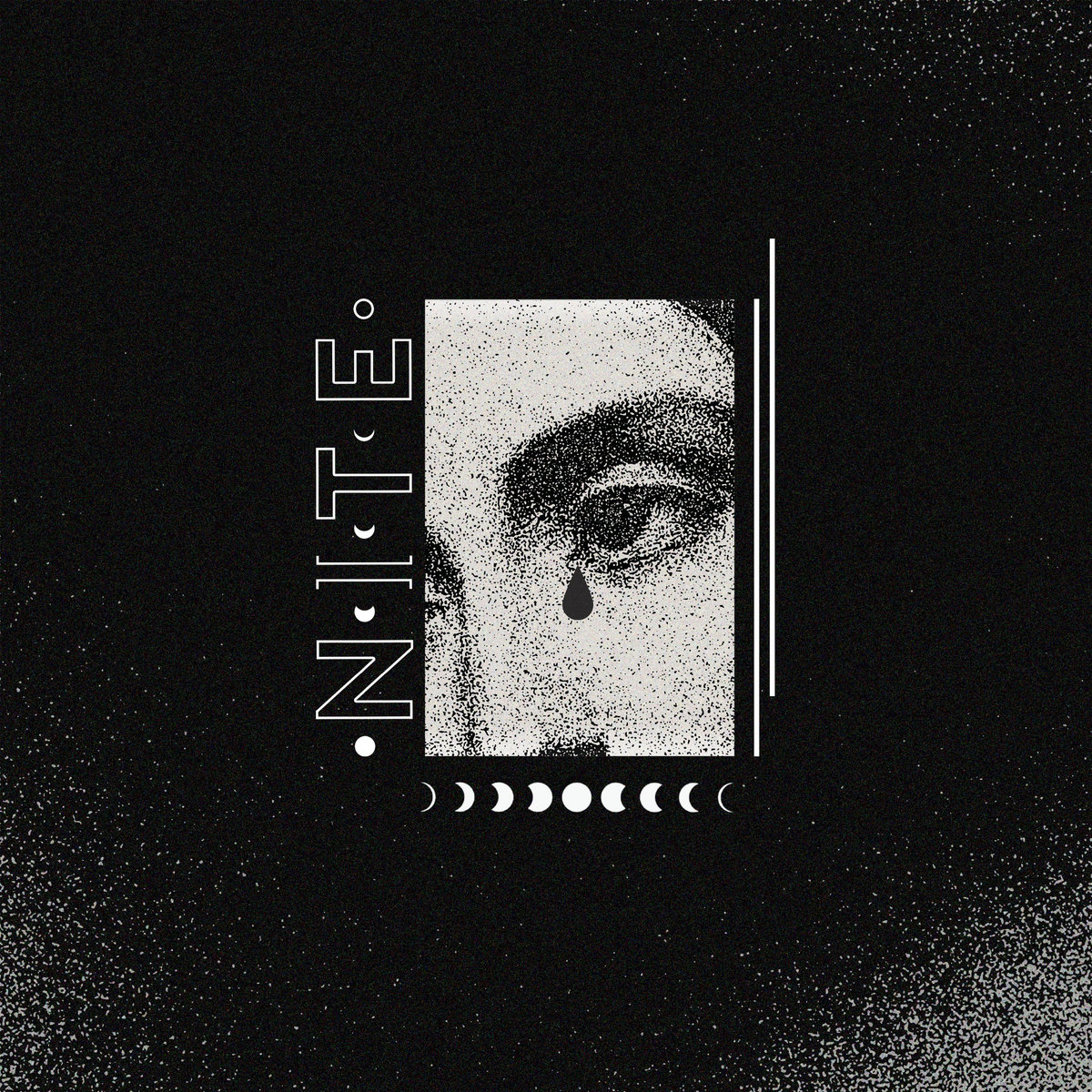
Artwork & Concept: The artwork for the self-titled album NITE captures the band’s central aesthetic: darkness, emotion, and the unique atmosphere of the night. The high-contrast black-and-white portrait serves as a visual extension of the music—vulnerable, mysterious, and intense all at once.
The symbolism of the moon phases, which accentuate the face, is particularly fascinating. Even though NITE doesn’t feature a classic, large moon as the focal point on the cover, this motif fits perfectly with the band’s world. The moon has always symbolized change, transience, and renewal—themes that also run through the album’s songs.
The waning moon can be seen as a symbol of the album’s darker moments: loss, doubt, and the struggle with inner conflicts, as felt in songs like “Fail You,” “End In Tears,” and “Have Mercy.” The waxing moon, on the other hand, represents the return of light—hope, solidarity, and the strength expressed in songs like “Our Light Will Never Die.”
The album feels like a cycle: it plunges into darkness but doesn’t lose itself in it. Like the moon, which never completely disappears, NITE’s music always carries a spark of light within it. It is precisely this blend of melancholy and hope that gives the album its special appeal.
With NITE, the band has created a multifaceted body of work that captivates from the first song to the last. It blends a melancholic darkwave atmosphere with danceable synth-pop and post-punk elements, telling stories of pain, hope, self-doubt, and solidarity. It is precisely these contrasts that make the album so special. In my opinion, NITE is one of the band’s strongest releases and impressively demonstrates just how emotional and, at the same time, rousing modern darkwave can sound. In doing so, the band succeeds not only in reviving the aesthetics and sound of the ’80s but also in translating them into a modern musical language—as if this genre had never disappeared but had evolved seamlessly into the present.
Christina Angrabeit
Editorial note: Further clarifications or minor editorial adjustments may be made at a later date.
Music:
Lyrics:
Production:
Artwork:
Tracklist:
All Your Pain 04:00
Cries For Help 03:24
End In Tears 02:55
Easy 03:46
Fail You 02:50
We’re Not Normal 03:40
Oblivion (My Obsession) 02:55
Have Mercy 03:04
Price For Heaven 03:46
Our Light Will Never Die 02:53
Burn 4:30 (only available on streaming platforms)
NITE Line Up:
Kyle Mendes – Vocals, Bass, Synths, Programing
Myles Mendes – Vocals, Guitar, Synths, Programing
Phil Helms – Drums, Percussion

